PAOLA BUEDO
Doctor and researcher specialising in bioethics and mental health.
”The available evidence is compelling regarding the importance of protecting and strengthening our mental health. It's not just about preventing mental health problems; it's also about equipping us with the tools to improve our mental health day by day, both individually and collectively.”
Paola has a Medical degree, a Master's degree in Bioethics and a PhD in Medical and Health Sciences. She works as a researcher specialising in bioethics and mental health. This interdisciplinary approach enables her to apply an ethical, critical and reflective perspective to the field of mental health.
She has served as an international consultant on bioethics and mental health for the Inter-American Commission on Human Rights, providing expert advice on cases involving the discharge of people with mental health conditions. She has also provided consultancy services to the World Health Organisation, contributing to the drafting of technical documents on bioethical issues, and participated in activities funded by the Wellcome Trust, aimed at raising awareness of the ethical implications of stigma against people with mental health conditions.
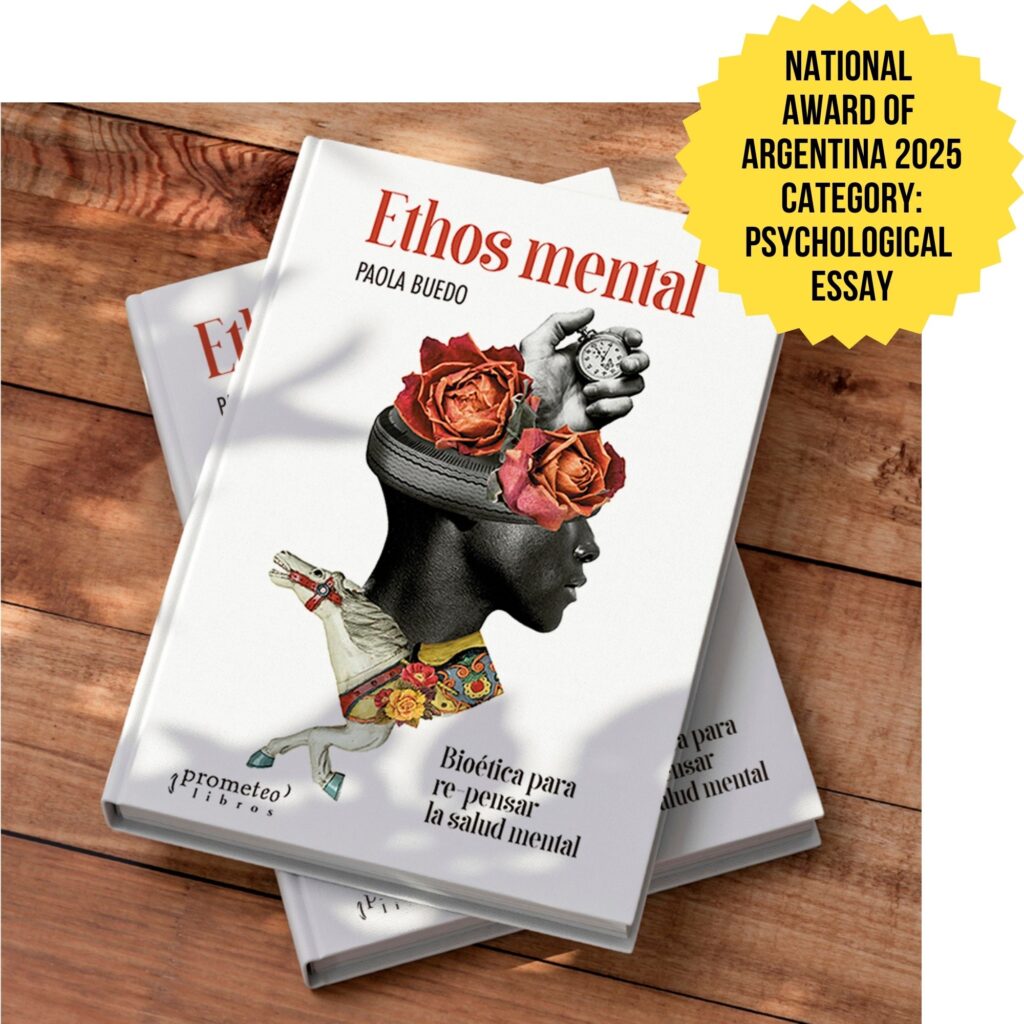
She has published multiple articles on bioethics, mental health and gender in international academic journals. She is the author of the book Ethos Mental. Bioethics for Rethinking Mental Health (Editorial Prometeo), which won the 2025 prize for the best psychological essay.
Her focus areas include acknowledging the ethical significance of people's suffering experiences, incorporating individuals' social dimensions into mental health approaches, and promoting collective mental health.
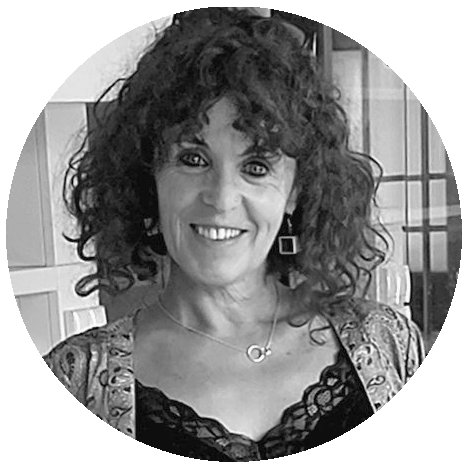
REBEKA ELIZEGI
Graphic designer and visual artist specialising in collage.
"From my experience of running collage courses and workshops for a wide range of people, I have found that collage is an excellent tool for self-exploration, as well as for nurturing self-esteem and personal well-being."
Rebeka is a visual artist and graphic designer graduated from the Massana School of Art and Design in Barcelona, and she uses collage as an artistic expression to develop her small, medium and large format pieces, always using the manual collage technique based on the exploration of different materials.
The female figure occupies an important place in her work, as she also focuses on issues such as gender diversity and other social issues.
Images of the body are also a constant in her work; the body understood as a space that oppresses people, marking and stigmatizing them by color, age, or gender.
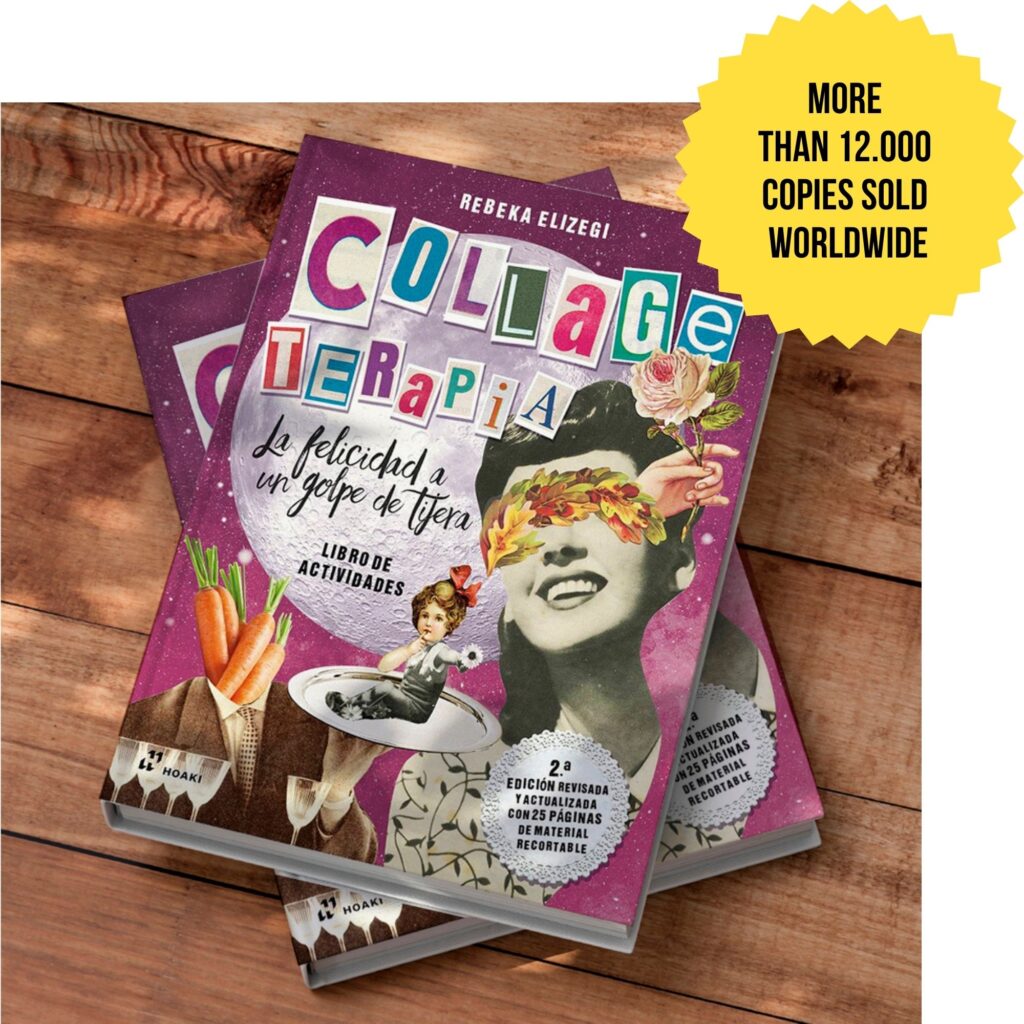
In addition to her exhibitions, which are more artistic and personal in nature, her collages have also been used to illustrate numerous book and magazine covers, as well as album covers and posters. She has published several illustrated books using collage and is the author of Collage Therapy and Collage by Women (Hoaki Books), Collage Creativo (Alma Editorial) and Collage to Change the World (Bis Publishers).
Her work has been exhibited in Barcelona, Madrid, Donostia, Los Angeles, Warsaw, Kiev and Berlin.
She has delivered courses and workshops on artistic, cultural, and social topics to various institutions, cultural venues, and museums.